Knowledge base|Technologie
Securing Custom Software: What You Need to Know
Custom software gives businesses exactly the functionality they need, but it also comes with its own responsibility: security. Unlike off-the-shelf packages, there's no vendor automatically rolling out patches to thousands of users at once. In this article, we explain which security measures belong with custom software and what technical decision-makers should pay attention to.
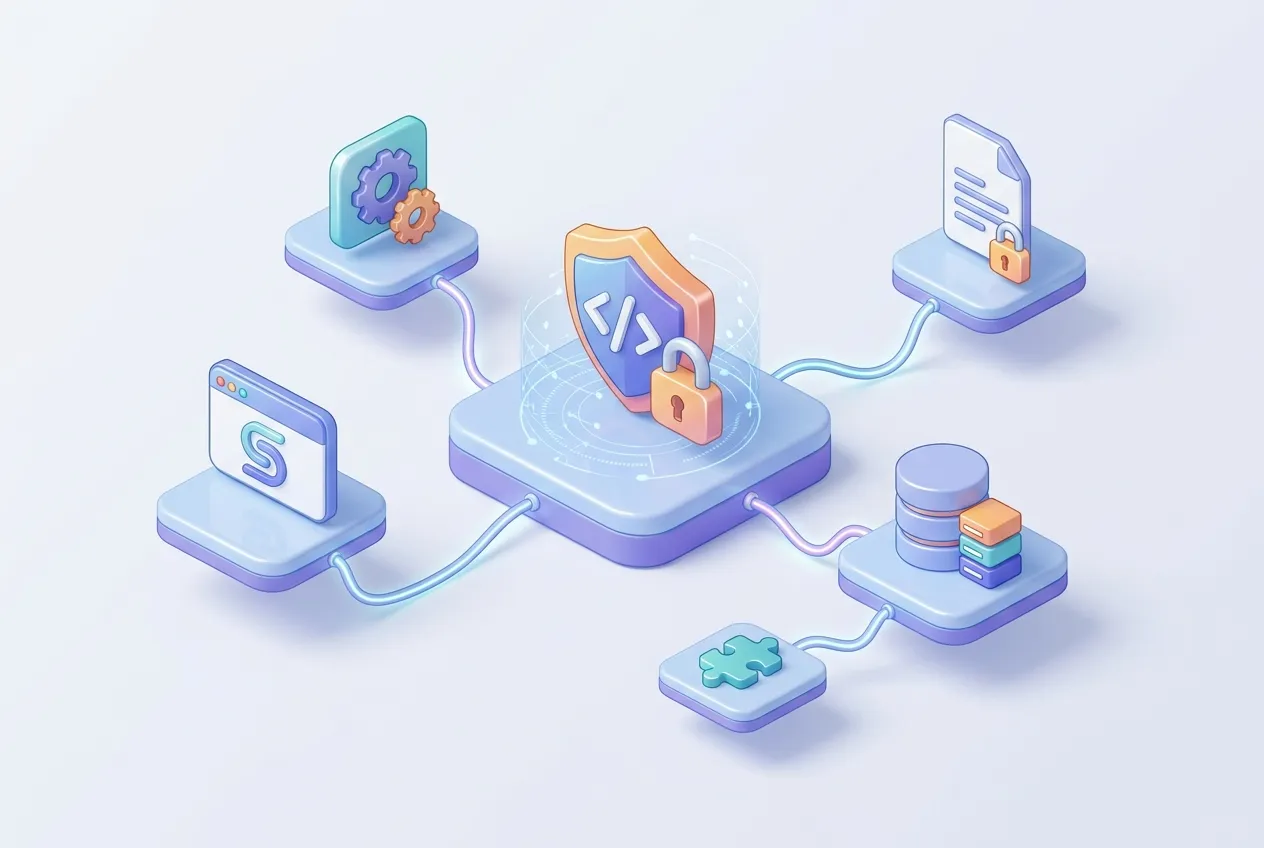
Why Is Security Different for Custom Software?
With off-the-shelf software, part of the security responsibility lies with the vendor, who releases updates, patches vulnerabilities, and manages a large part of the infrastructure. With custom software, that responsibility largely falls on the development partner and the client themselves. There's no large community reporting vulnerabilities and no ready-made security updates arriving automatically.
This doesn't mean custom software is less secure. In fact, because the code is written specifically for your business, it's often less interesting to automated attacks that target known vulnerabilities in popular CMS platforms or plugins. However, it does require a deliberate approach: security needs to be considered from the very first line of code, not added as an afterthought.
Secure Coding: Security as Part of the Development Process
The foundation of secure custom software lies in how it's built. Secure coding means developers structurally rule out known risks such as SQL injection, cross-site scripting (XSS), and cross-site request forgery (CSRF) by always validating and sanitizing input. Properly handling user permissions and sessions also prevents malicious actors from gaining unauthorized access to sensitive functionality.
It's also important that external libraries and frameworks stay up to date. Many vulnerabilities don't originate in custom-written code, but in outdated dependencies that are no longer maintained. A solid maintenance process with periodic updates and dependency scans is therefore just as important for custom software as it is for a Headless CMS website or any other digital platform.
Infrastructure and Network Security
Besides the code itself, the environment in which the software runs plays a major role. Think of a well-configured firewall, encrypted connections via SSL/TLS, and separating environments such as test, staging, and production. This prevents an error in a test environment from directly impacting the live application.
Access to servers and databases must also be strictly managed. The principle of 'least privilege' - everyone only gets the permissions they actually need - limits the damage if something does go wrong. For applications handling sensitive data, such as a web portal or intranet, this is one of the most important measures to prevent data breaches.
Testing, Monitoring, and Continuous Improvement
Security isn't a one-time action, but an ongoing process. Regular security scans and penetration tests help detect vulnerabilities before malicious actors do. Code reviews, where another team member critically examines the written code, also help identify risks at an early stage.
Monitoring is equally essential: by logging and analyzing suspicious traffic, error messages, and login attempts, technical teams can respond quickly to an incident. This ties into broader measures such as protection against DDoS attacks and applies to every layer of the technology supporting a custom application.
What Should Decision-Makers Pay Attention To?
As a technical decision-maker, you don't need to review every line of code yourself, but it is important to ask the right questions to a development partner. Do they follow secure coding guidelines? How do they handle updates to external libraries? Is there a process for testing and monitoring? And how is access to production environments managed?
A good development partner is transparent about these processes and considers security from the very start, rather than treating it as a separate topic. Especially with custom software, where functionality and interaction are often closely tied to design and user experience, it's important that security doesn't become an obstacle but a natural part of the whole.