Knowledge base|Technologie
Front-end and Back-end: Two Sides of the Same Website
As a marketer or decision-maker, you regularly hear the terms front-end and back-end, but what do they actually mean? In this article, we explain in plain language the difference between front-end and back-end development, and why you need both for a website or application that works well.
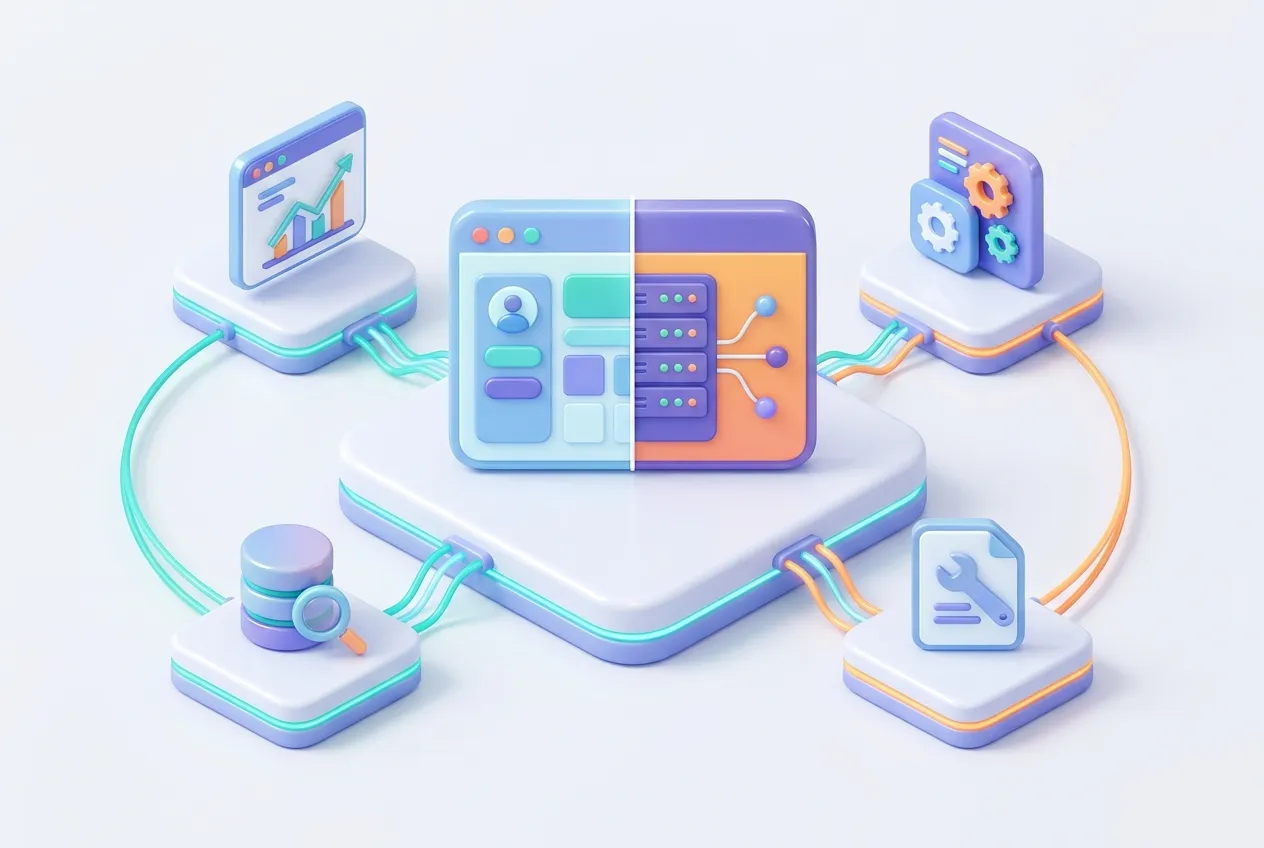
What is Front-end Development?
Front-end development is all about everything a visitor actually sees and interacts with on a website or in an app. Think of the page layout, colors, buttons, menus, and how content is displayed on different screen sizes. In short: the front-end is the outside, the "showroom" of your digital product.
Front-end developers use languages such as HTML, CSS, and JavaScript to turn designs into a working, interactive website. They make sure a website looks good and runs smoothly on desktop, tablet, and mobile. Good front-end development is therefore essential for the user experience: a slow or confusing website quickly causes visitors to leave.
What is Back-end Development?
While the front-end is the visible side, the back-end operates behind the scenes. The back-end is responsible for all the logic, data storage, and processing needed to make a website or application function. Think of storing orders in a webshop, processing a login attempt, or retrieving data from a database.
Back-end developers work with servers, databases, and programming languages such as PHP, Python, Java, or Node.js. They build the foundation on which the front-end can rely: without a properly functioning back-end, a website might look great but wouldn't be able to do anything. Back-end development is therefore just as important as the visible side, even though as a visitor you see very little of it.
How Do Front-end and Back-end Work Together?
Front-end and back-end are inextricably linked. For example, when a visitor fills in a form on a website, the front-end ensures that this form looks good and works properly. As soon as the visitor clicks "submit," the front-end sends the entered data to the back-end. The back-end then processes the data, stores it in a database, and possibly sends a confirmation back, which the front-end then shows to the user.
This collaboration happens through so-called APIs: a kind of "middleman" that ensures the front-end and back-end can communicate properly with each other. Developers who master both sides are also called full-stack developers. When building a website or application, it's important that the front-end and back-end are well aligned, so changes can be implemented smoothly and the website keeps running reliably, for example with an approach like Continuous Development.
Why Does This Distinction Matter for You as a Marketer?
As a marketer or decision-maker, you don't need to write code yourself, but understanding the difference between front-end and back-end does help you communicate better with your development team or agency. Do you want the website to look different, load faster, or have a new button added? Then you probably mainly need front-end work.
Is it about connecting a new CRM system, automating order processes, or securely storing customer data? Then you're in back-end territory. Knowing this distinction allows you to set more realistic expectations about timelines and costs, and ask more targeted questions to your technology partner.